


Expandable Container House Vs Tiny House: Which Is Better?
Ⅰ.Space Utilization: Flexible Expansion vs Compact Design
The biggest advantage of an expandable container house is its ability to create more usable space when needed. The foldable structure allows the unit to be transported in a compact form and expanded after installation, providing a larger living area without increasing transportation costs.
A tiny house focuses on minimizing space through efficient layouts, built-in furniture, and multifunctional areas. It is suitable for individuals who prefer a simple lifestyle, while expandable solutions offer more flexibility for families, rental projects, and commercial applications.
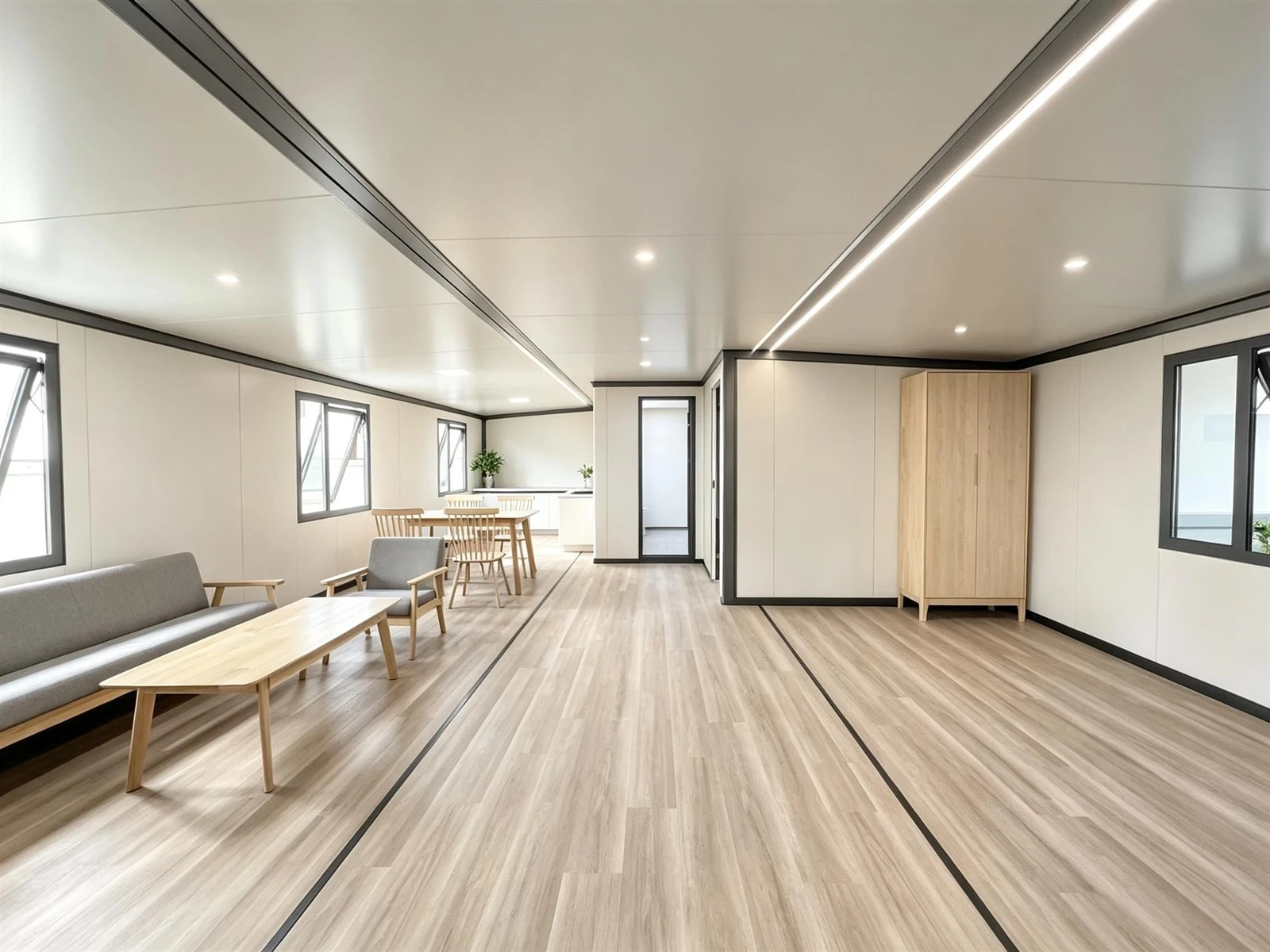
Comparison:
- Expandable housing: Larger expandable area, flexible layouts, suitable for multiple users
- Tiny house: Compact footprint, optimized storage, suitable for minimalist living

Ⅱ.Installation Speed and Mobility: Efficient Modular Solutions
Modern prefabricated housing is designed to reduce construction time compared with traditional buildings. Expandable container houses are manufactured in factories with pre-installed structures, electrical systems, doors, and windows, allowing faster on-site assembly.
Tiny houses often require customized construction processes, especially trailer-based models. Although they can be relocated, modifications and transportation may require additional preparation.
Expandable housing provides advantages for projects requiring rapid deployment, including vacation cabins, worker accommodation, emergency housing, and rental units.

Key benefits include:
- Factory prefabrication reduces installation complexity
- Modular design supports relocation and expansion
- Suitable for temporary and permanent accommodation projects

Ⅲ.Durability and Weather Performance: Built for Different Environments
Material selection plays an important role in the service life of any compact home. Expandable container houses typically use reinforced steel frames combined with insulated sandwich panels, providing strong structural stability and improved resistance to wind, rain, and temperature changes.
Tiny houses are usually built with lightweight materials such as wood, aluminum, or composite panels. Their performance depends heavily on construction quality and maintenance requirements.
For regions with changing weather conditions, modular steel structures can provide a more stable and durable housing solution.

Material advantages
Strong steel frame structure
Better insulation performance with sandwich panels
Lower maintenance requirements
Long-term usability for various climates
Ⅳ.Cost Value and Application: Choosing the Right Housing Solution
The best choice depends on the intended application. Tiny houses are ideal for personal retreats, small homes, and people seeking a simplified lifestyle. Expandable container houses provide greater commercial value because they can be quickly installed in large numbers and adapted for different projects.
For developers, hotels, campsites, and rental businesses, expandable modular homes offer advantages in scalability and operational efficiency.

Expandable housing can be used for:
Family residences
Office spaces
Rental accommodation
Emergency shelters
Remote area housing
Conclusion
Both expandable container houses and tiny houses provide modern alternatives to traditional construction. Tiny houses focus on compact living and simplicity, while expandable container houses emphasize flexibility, faster installation, and wider application possibilities.
For those looking for a scalable, durable, and adaptable housing solution, modular expandable designs offer a practical choice for future living and commercial development.


