


How Cost-effective Are Expandable Container Houses? How Much Do They Save Compared To Traditional Construction?
Expandable container houses offer significantly better value than traditional brick-and-mortar or light steel structures. Their core advantages are cost savings, time savings, ease of maintenance, and reusability. Both short-term procurement costs and long-term overall costs are much lower than traditional construction. Tianjin Nanxiang, as a large-scale manufacturer, leverages its standardized prefabrication capabilities to maximize cost advantages, saving customers more money. Suitable for residential, office, and commercial applications.
1. Over 60% Savings in Procurement Costs
We use fully prefabricated, large-scale, standardized production in our factory, significantly reducing material and labor losses. Traditional construction requires on-site formwork, welding, and decoration, resulting in high losses and costs. In comparison, our products can save customers over 60% in procurement costs.
2. 90% Reduced Construction Time, Drastically Lowering Time Costs
Traditional brick-and-mortar houses take 3-6 months or even longer to build, while light steel frame houses require 1-2 months. Our expandable container houses are prefabricated in the factory; on-site installation only requires unfolding and securing, allowing for move-in within one day. A 40-foot model can be installed by 6-8 people in 2 hours, and mass production can be completed within 7 days, significantly saving time and costs.
3. Extremely Low Post-Construction Maintenance Costs
Our products require only routine anti-corrosion and waterproofing checks and minor parts replacement. Traditional buildings require regular major repairs to walls, roofs, and plumbing/electrical systems, with maintenance costs more than 10 times that of our products.
4. Movable and Reusable, No Idle Costs
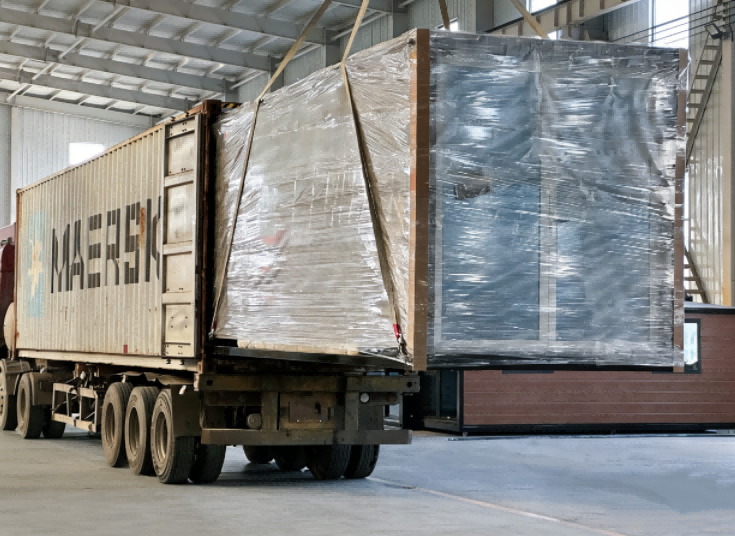
The product shrinks to standard shipping dimensions, allowing for complete transport. It can be repeatedly unfolded and folded over 1000 times, flexibly relocating and reusing in construction sites, guesthouses, and other settings. Traditional buildings are fixed and immovable; site changes require either idleness or demolition, incurring additional costs.
5. No Significant Infrastructure Costs
Our products have extremely low foundation requirements. Hardened, flat ground with cement blocks is sufficient, while soft ground only requires a simple 10-15cm subfloor. Unlike traditional buildings that require large foundations, this saves substantial infrastructure costs and allows for compliant placement on non-construction land.
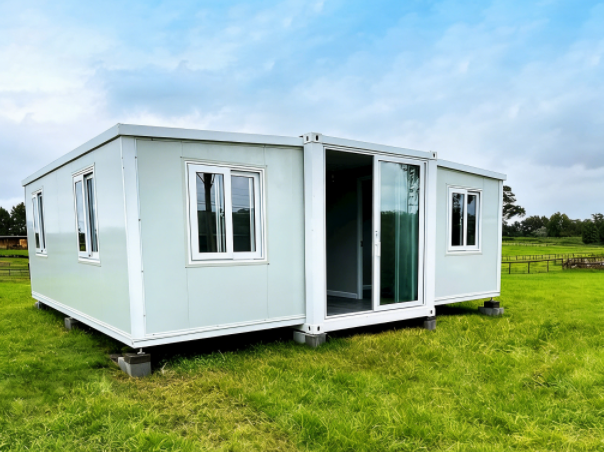
Furthermore, our products support modular assembly and stacking, allowing for flexible expansion later without the need for secondary construction, further reducing costs. Overall, whether for short-term purchase or long-term use, its cost-effectiveness far surpasses traditional buildings, and our large-scale production and professional services ensure this high cost-effectiveness.


