


What Quality Control Standards Do Chinese Container House Manufacturers Follow?
Ⅰ.Quality Control Starts With Materials and Structural Components
A professional manufacturing process begins before the first frame is welded. Incoming steel, sandwich panels, insulation materials, doors, windows, fasteners, electrical components, and other key materials should be checked against production specifications.
For steel structures, manufacturers commonly verify material grade, thickness, dimensions, and surface condition. During fabrication, cutting accuracy and structural alignment are also important because dimensional deviations can affect assembly, transportation, and installation.
Welding is another critical control point. Factory inspectors may check weld appearance, dimensions, joint quality, and structural alignment. For projects with higher requirements, additional non-destructive testing may also be arranged.
A structured quality-control process helps manufacturers identify material or fabrication problems before they reach the final assembly stage.

Ⅱ. ISO 9001 and Market-Specific Requirements
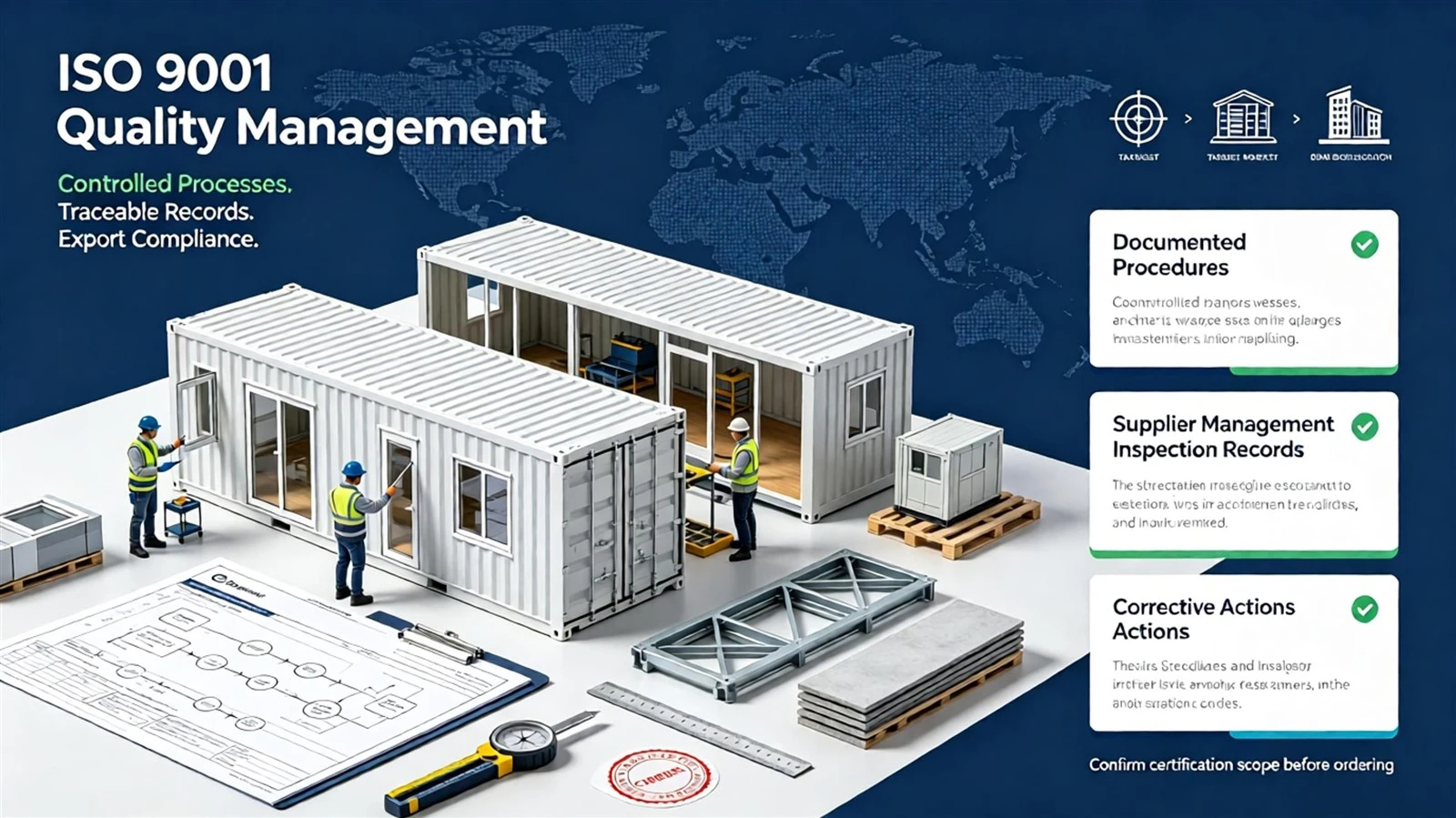
ISO 9001 is widely used as a framework for quality management in manufacturing. It focuses on controlled and repeatable processes, including documented production procedures, supplier management, inspection records, corrective actions, and traceability.
For export projects, manufacturers may also need to consider requirements specific to the destination market. Depending on the project location, specifications may involve European, North American, Australian, or other local building and electrical requirements.
It is important to understand that ISO 9001 is a quality-management-system certification rather than proof that every container house automatically meets the building codes of every country.
Therefore, buyers should confirm the exact certification scope and product specifications before placing an order.
Ⅲ.Factory Testing and Pre-Shipment Inspection
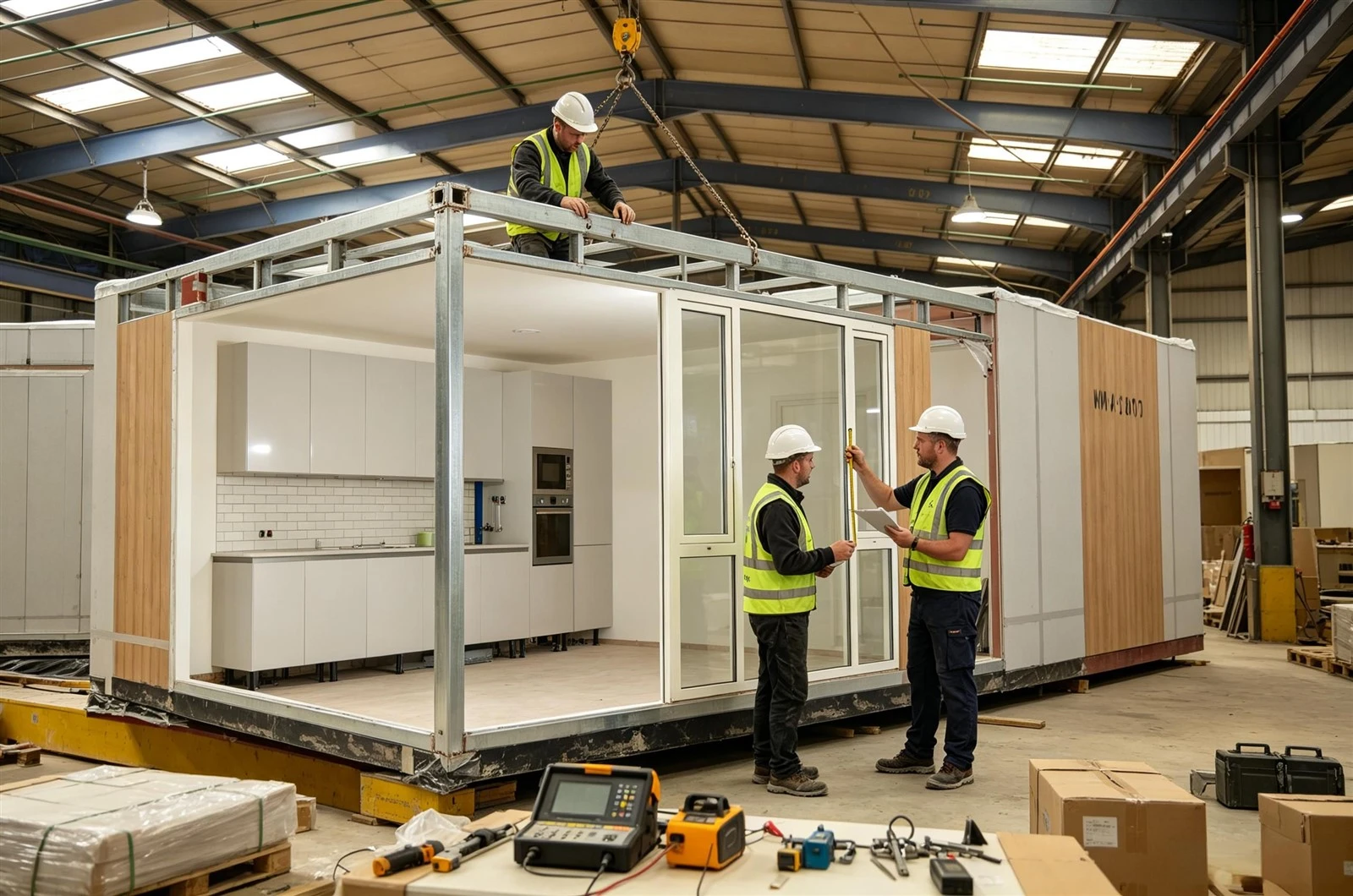
Quality control does not end when the main structure is completed. Before shipment, professional manufacturers can conduct final inspections to confirm that the completed unit matches approved drawings and production specifications.
Typical inspection points include:
- Structural dimensions and frame alignment
- Welding quality and connection points
- Roof and wall installation
- Door and window operation
- Waterproofing and sealing
- Insulation installation
- Electrical connections
- Plumbing and drainage
- Interior and exterior finishing
- Packaging and loading condition
For larger international projects, buyers can also arrange independent third-party inspections before shipment. This provides an additional verification layer and allows potential issues to be identified before the container house leaves the factory.

Ⅳ.What Should Buyers Ask a Chinese Container House Manufacturer?
When comparing Chinese container house manufacturers, price should not be the only consideration. Buyers should evaluate the manufacturer's complete quality-control process.
Material Documentation
Ask for information about steel grades, structural thicknesses, insulation materials, wall panels, doors, windows, and other major components.
Production Inspection
Confirm whether the factory performs incoming-material inspection, welding inspection, dimensional checks, assembly inspection, and final quality control.
Testing and Certification
Review relevant quality certificates and testing reports. Check the issuing organization, validity, and scope instead of relying only on certification names.
Third-Party Inspection
For large-volume orders or customized projects, independent pre-shipment inspection can provide additional assurance.
Destination-Market Compliance
Confirm that the container house is designed for the destination country's requirements, including structural loads, electrical standards, fire performance, insulation, and local building regulations.
For international buyers, the most reliable approach is to evaluate materials, manufacturing processes, inspection procedures, testing documentation, and market compliance together. A manufacturer with a systematic quality-control process can provide greater consistency and make international container house procurement more predictable.
No Information


